
(Scroll down for english version)
La realidad es que uno no puede saber con exactitud cuáles son los procedimientos mentales de cada individuo a la hora de realizar una compra y cuáles son los parámetros que rigen esos procedimientos: proximidad, comodidad, prisa, economía o simple escasez profunda de materia gris.
Las “skateshops” o “tiendas de monopatín” (traducción aceptada de modo unánime por el claustro de profesores de Cambridge) son un concepto más complejo de lo que parece, más ahora, que tienduchas de aprovechados y oportunistas se cuelgan esa etiqueta (o que grandes superficies de la “moda” y el “deporte” se han apresurado a incorporar los ítems más lucrativos que derivan de nuestra actividad preferida. La complejidad, a mi modo de ver, reside en que, en un estado de derecho (y blablablá…) y “libertad”, decirle a la gente dónde debe y no debe realizar sus compras con el dinero que ganan con el sudor de su frente, el de sus padres o el de los empleados de sus padres, pues resulta algo en cierto modo desagradable de hacer, más todavía si tenemos en cuenta que todo ser viviente tiene derecho a ganarse su ración de alimento.
A pesar de todo ello, si atendemos con criterio al tema de las tiendas de skate, está claro que estas se pueden dividir entre lo que podríamos llamar, como antes se ha dicho, “oportunistas” y lo que se podría decir “gente del patín”. Oportunistas los hay de pequeño calado, es decir, pequeñas tiendas de deportes que incorporan algo de material de skate, personajes que tocan el tema “extremo” y montan tiendas con pegatinas de Monster hasta en la taza del wáter, tiendas llenas de ropa y de zapatillas, pero en las que preguntas por cojinetes y una dependienta tetuda te dice “eso no sé lo que es” (me ha pasado, palabra…tengo el teléfono de la tetuda, no palabra) y una infinita cantidad de variantes que contienen un grado importante de “deformación” en mayor o menor porcentaje. También hay los oportunistas de gran calado, grandes superficies, multinacionales del deporte y putas mierdas en general.
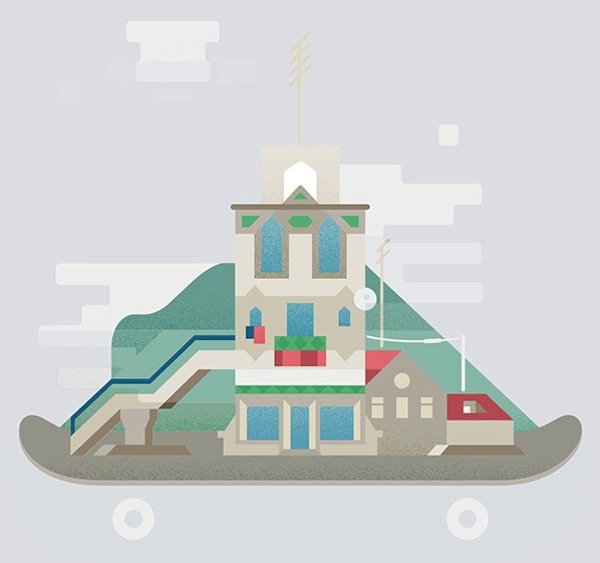
Ahora vamos a lo que es “gente del patín”, o sea, a lo que son las tiendas que a mi modo de ver hay que apoyar, partiendo de la base también de que las marcas de skate más valiosas y prestigiosas siguen estando en manos de gente que patina o ha patinado con todo su corazón. Aquí no hablamos de un invento vomitivo como el “scooter” ese de las narices, que no es más que el diseño de un tipo austríaco que se ha forrado gracias a una moda para impedidos cerebrales a los que les gustaría ser skaters pero su vagancia o su mal gusto se lo impide. El monopatín surge de una evolución, no es un invento lleno de avidez capitalista como esa porquería de metal…a ver, no soy tan inocente de negar las enormes dosis de capitalismo que mueven el skateboarding, pero, aunque así sea, nunca será lo mismo que una cosa inventada ya directamente para ganar dinero. Bueno, abandonando todo este rollo, centrémonos en el hecho de que una “skateshop” de verdad, llevada por alguien con amor puro al patín, por encima del amor al dinero (que también se tiene, pero por necesidad, no directamente por avaricia), siempre va a tener aquello que mantiene la llama pura y viva, aquello que demuestra que, contrariamente a lo que muchos creyeron, el skate no es una moda americana tonta y pasajera para adolescentes, aquello que es “cultura” en definitiva y que yo veo que muchos comercios “reales” se esfuerzan en mantener: premiers de vídeos, exposiciones, promoción de pequeñas marcas, digamos, “underground” , patrocinio digno (en la medida de la economía de cada una) de equipos que se identifican con el espíritu de su tienda, etc. etc.
Hay una gran cantidad de desinformación y la desinformación produce monstruos, como la anécdota que me contó un dueño de una prestigiosa tienda de skate en Barcelona, en la que resulta que un padre se indignaba porque no había “scooters” en su “skateshop”. El pobre hombre se enfadó con el despiadado “fascismo” de sólo tener esas basuras antiguas de madera..jajajaja…en fin. Esto es un mensaje para todos aquellos que de verdad aprecian y adoran el skateboarding, por favor, daros cuenta de que aquello que más amáis es una enorme maquinaria, es cierto, pero hay que engrasarla con buenas dosis de pureza, frescura, improvisación, arte y lo que es la pura calle. Para que esa maquinaria funcione, algo muy importante es intentar mantener el dinero en un círculo adecuado y olvidarse un poco de aquello de “support your local skateshop”, porque puede ser que tu “local skateshop” esté en manos de un tipo que no va a intentar dinamizar la escena de tu ciudad, simplemente, a lo sumo, aportará una versión cutre y competitiva del patín o simplemente no hará nada más que sacar tajada vendiendo todos esos colores horribles de ejes y zapatillas que nunca querrían en una tienda de verdad. Si puedes desplazarte hasta una tienda de verdad, de la que tengas buenas referencias, simplemente, es mejor que lo hagas.





The truth is that no one is able to know the exact mental processes involved in the act of shopping, not even the parameters that set up the whole engine: proximity, comfortableness, urgency, financial resources or just a profound lack of grey matter.
A Skateshop or, as in Spanish language, ‘tienda de monopatín’ (something similar to ‘skateboard shop’, a translation unanimously accepted by the teachers’ board of Cambridge) is a concept far more complicated than it really seems, now more than ever, when minor shops owned by opportunists make use of that name. Even big malls and department stores that specialize in ‘fashion’ and ‘sportswear’ rushed to incorporate to their shelves all those profitable items derived from the practice of our favourite activity. From my point of view, the most complicated thing about it, lies in the fact that, in a context of democracy (bla bla bla…) and freedom, telling the people where to spend the money they earn with so much effort (their effort, their parents’ or their parents’ employees) is somehow disgusting, even more if you take into account that all human beings have the right to earn their living.
However, if we judge the topic of skateshops with further criteria, it is clear that they can be divided into two categories: as we said before, ‘opportunists’ and ‘skate insiders’. The firsts ones are commonly small-sized sports shops with skate products. The owners deal with the topic revolving around ‘extreme sports’ and set up places with Monster stickers all around, even in the toilet. Those shops are packed with clothes and apparel, but if you ask the staff about skateboard bearings they go like ‘I dunno what you’re talkin’ about’ (I experienced it, I swear… I got the phone number of that shop assistant, a girl with such big boobs… no way, just joking) and an infinite amount of other possible scenarios that contain similar levels of idiocy, add this to the wide-range of ‘opportunists’ such as department stores, international sportswear companies and other shit in general.

Now, let’s talk about ‘skate insiders’, in other words, shops that I think we should support, with the assumption that the most valuable and renowned brands of skate products are still in the hands of passionate people in the skateboarding scene, or, at least, were in the past. We are not talking about an annoying creation such as the ‘scooter’, nothing else than a design by an Austrian guy who became filthy rich thanks to the masses´questionable consumer habits, who would like to be skaters but, indeed, they are not. The skateboard is the result of a development, not only a capitalist creation like that piece of shit made of metal… I am not claiming to be unaffected by the powers of the market. However, real skateboarding will never be the same as something created with the sole purpose of making money. Well, back to the topic, let’s focus on the fact that a real ‘skateshop’, owned by someone with real passion for skateboarding, will always keep the flame alive and pure, which shows that, against what many people might think, skateboarding is not a stupid passing fashion for teenagers imported from the USA, but real ‘culture’. Something that I have witnessed myself is that many shops try to keep this spirit alive through premiering videos, exhibitions, promotion of small brands, sponsorship (according to the financial health of the shop), and so on.
The web of misinformation is wide, and misinformation creates monsters. The owner of a renowned skateshop in Barcelona once told me about a guy who went mad at him because there were no ‘scooters’ available in the ‘skateshop’. He got upset with the ‘fascist’ idea of only having those old and tatty pieces of wood in the shop… Lol… I would like to send a message to those who love and value skateboarding: please, be aware that the thing you love the most in the world is a huge machine, that’s the way it is, but you have to fuel it with doses of pureness, freshness, improvisation, art and street. To make this machine work, it is important to forget about the money for a while and not rely so much on the sentence ‘support your local skateshops’, because your local skateshops could be in the hands of a guy who does not aim to keep alive the skate scene in your city. At most, they will provide a competitive and corny point of view. Or maybe they just want to make a bunch of money by selling boards and sneakers in hideous colours that a real shop would never sell. It’s simple: as long as there is a real shop with good references around, you ought to go.
Words: Flx Lobodemar.
Art: Colacho Gallardo.
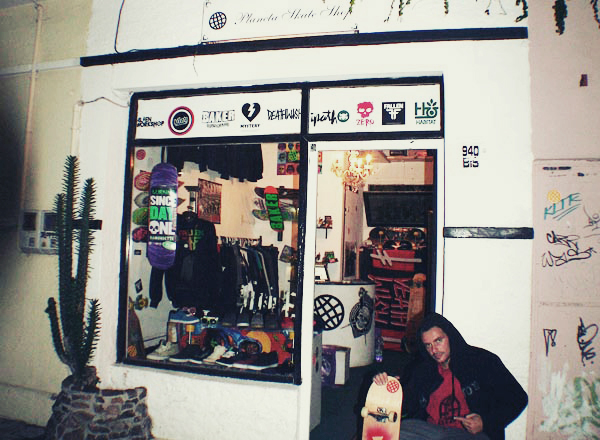
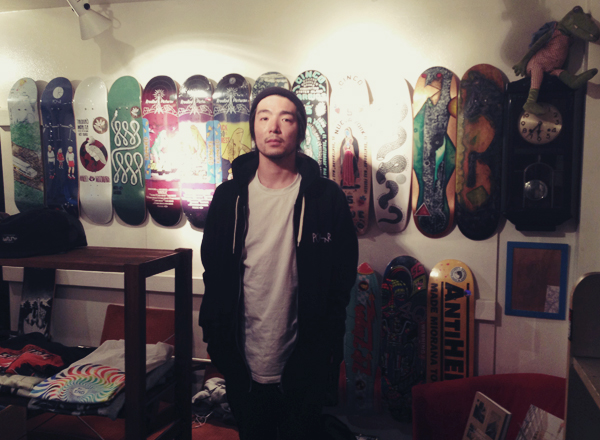
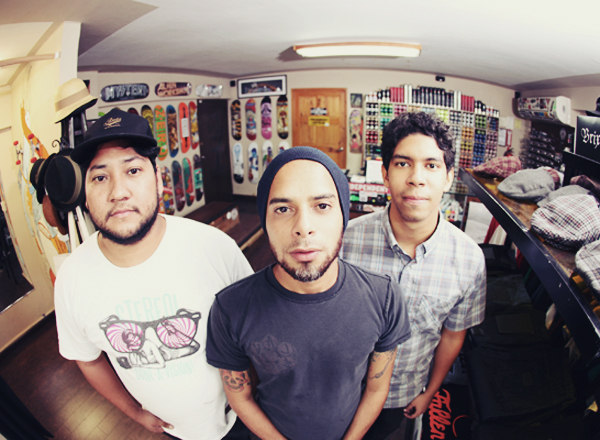
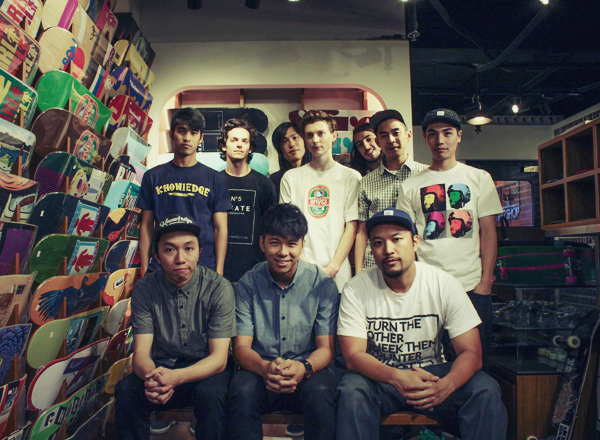
Photo: Skateshops that take care of skateboarding around the world and its representatives (left to right):
Atlas Skateboard Store: Patrick Beaudouin, Nike Perez, Ryen Motzek, Mike Manidis.
Nozbone: Damien, Grégoire, Valentin, Alexis.
Planeta Skateshop: Kike Machado.
Welcome Skateboarding: Pablo García, Borja Santiago. Photo: Victor Calvo.
Decks: Ronald Andres, Mauricio Salgado, Sebastian Archila «Biche».
Argument Skateboard Shop & Gallery: Yusuke Hirata.
Fifty Fifty Store : Rich Smith, Justin Sydenham, Danny Wainwright, Louis Marshall.
Armonica: Eloy Olivella, Vladimir Rios, Eduardo Guerra.
85ive2: (front) A Lim, Chris Bradle, Mouse, Seb Batty, Piet Guilfoyle, Ar Chun, Ar Ngau. (Behind) Pro B, Chun Chai, J Brian Siswojo, (not shown) Stephan Janoski. Photo: Nigel Ong.
Deja una respuesta