
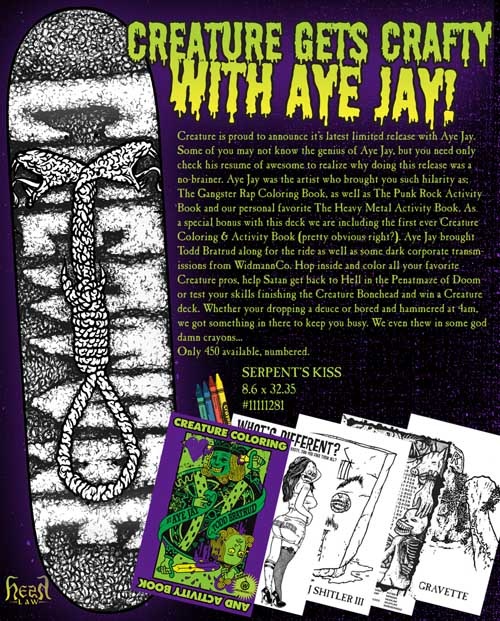
En el 2008 descubrí el libro Gangsta Rap Coloring Book en la estantería de una tienda, enseguida compré una copia. Me fascinó que alguien metiera a los G`s más duros de la música en un libro de colorear, para gozo de fans y para que los hijos de estos, a base de rotulador, dieran buena cuenta de las siluetas de los raperos que ahí aparecen. Años más tarde, hojeando el catálogo de verano de una compañía de skate, relacioné la firma de uno de los gráficos de las tablas con la de ese mismo libro (el que me va a entretener en la residencia llegado el momento). A partir de ahí empecé a seguir y conocer más de un californiano de pura cepa, padre, melómano e incombustible ilustrador influenciado por los maestros que le dieron energía, color y humor a la etapa más sólida de la iconografía skate. A Aye Jay Moreno le está tocando continuar la tradición.
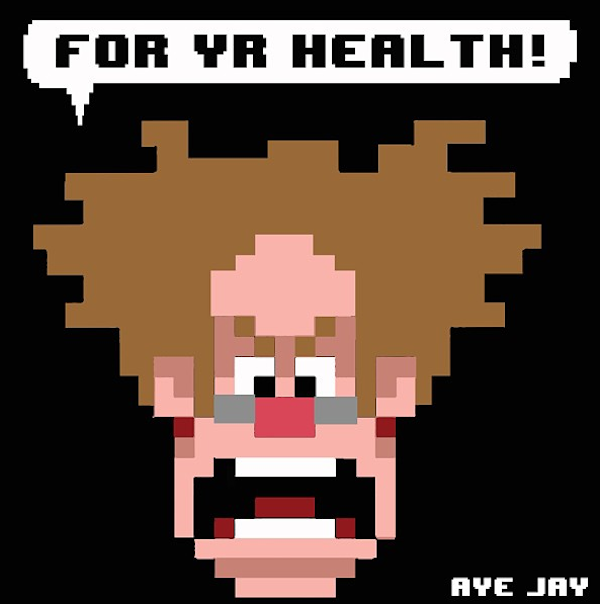
¿Cómo y cuándo te metiste en la ilustración?
Empecé a dibujar a una edad muy temprana y es lo único que he querido hacer desde entonces. En los primeros años de mi adolescencia me inspiraban el skate y el arte pop, y me di cuenta de que podían ser la vía para una carrera.
Hablando de inspiración, ¿qué vino antes: el arte, la música o el skate?
En ese orden. Mi padre era músico, así que crecí en una casa llena de música, cosas raras incluso para esa época de finales de los 70 y primeros 80, un montón de reggae y world music. Empecé usando los LPs para dibujar encima, un hábito que todavía mantengo. El rap me inspiró desde bien temprano, cómo en el 86. El skate llegó poco después.
Basándote en esas tres disciplinas e influencias innegables, ¿cómo le describirías tu trabajo a una persona invidente?
Tinta fuerte en blanco y negro. Solía describirlo como una mezcla de hip-hop y (Robert) Crumb, pero no es correcto. Yo me defino como ilustrador y punto. No me gusta sobreintelectualizar lo que hago, soy un dibujante, hago dibujos y me siento muy afortunado de que me paguen por ello y de trabajar con buena gente.

¿Cuál fue el primer gráfico por el que te pagaron y qué representó en ese momento para ti en lo profesional y en lo personal?
Mi primer gráfico fue para Consolidated Skateboards en el 2004 y no me pagaron, al menos en cash. En esa época, mi libro Gangsta Rap Coloring Book ya tenía algo de repercusión, pero fue Todd Bratrud el que me dio la oportunidad, ya que era director creativo en la compañía. Fue muy fuerte cuando abrí aquella caja llena de material de skate que me envió, casi me echo a llorar.
Con Graffitti Art Coloring Book, Gangsta Rap Coloring Book y Heavy Metal Funtime Activity Book hiciste un buen trabajo de introducción para niños (y adultos) al graffitti y a la música, a través de un pasatiempo tan entretenido como es colorear, ¿fue esa tu intención mientras creabas los libros?, ¿sino cuál?
La primera intención era tener algo guay para colorear con mi entonces nuevo hijo. Como padre primerizo me sorprendió que no hubiera algo así en el mercado. Me había pasado diez años metido en el arte en Chico, mi pequeña ciudad, y quería empezar a hacer algo real y profesional fuera de ella, la repercusión que me dio el libro fue crucial para dar el siguiente paso, al igual que la popularización de Internet. Esa década haciendo arte local me ayudó a sacarle punta a mis aptitudes, de eso estoy seguro.

El prólogo del Gangsta Rap Coloring Book lo escribió el rapero J-Zone y el epílogo Sacha Jenkins (personalidad del periodismo hip-hop americano), ¿cómo fue la respuesta de los rappers que aparecen en el libro?, ¿alguna opinión o comentario especial que recuerdes y quieras compartir?
Ninguno se ha dirigido a mi directamente pero he visto entrevistas en las que se lo han dado a alguno y parece que les ha gustado. Shepard Fairey dejó que se le pagara la mitad por hacer la portada, ese tío es el mejor.
Según comentas en tu página web, Vernon Courtlandt Johnson, Marc McKee y Todd Bartrud son referentes para ti, ¿quién más de la cultura skate te ha influenciado así tan directamente y qué nuevos nombres de artistas en ese campo citarías para tener en cuenta en esta década?
La santísima trinidad compuesta por VCJ, Jim Phillips y Pushead son por seguro la fundación de mi apreciación del arte. Luego Cliver, McKee, Bratraud, Ron Cameron y, por supuesto, Mark Gonzales. Todo el material gráfico de esta gente fue súper importante para mí. Ahora hay mucha gente muy buena haciendo gráficos para tablas, mis favoritos son Brian Romero de Deathwish, Matt French en Pocket Pistols, Pitts y Wright en DLXSF, Seiben de Roger, Lucas Musgrave para NHS y otros cuantos más con mucho talento.

Siguiendo tu Instagram he visto algunos gráficos geniales rechazados por alguna marca o revista, ¿cuáles son algunas de las razones o «excusas» que te suelen dar para no aceptar dichas propuestas y cómo te suele sentar eso?
Cada compañía es diferente. A veces quieren ver muchas ideas, tú las pinchas en la pared y decides cual pega con lo que te piden. Yo dibujo ideas que son chorradas pero que me divierte hacerlas ¿De verdad creía que World haría una tabla con el Waka Flocka Flame Boy? No, pero me lo pasé genial dibujándolo. Cuando únicamente molesta es cuando aprueban algo que me he pasado tiempo para hacer y cambian de opinión. Muchas veces no te pagan lo estimado al completo y es frustrante haber perdido el tiempo.
Ésta es difícil: después de trabajar con algunas de las compañías más importantes del sector, ¿podrías nombrar tres de los gráficos de skate más importantes que has creado y por qué?
No creo que mis gráficos sean importantes, pero tengo mis favoritos: la Corey Duffel, «The Duffman», tuvo una buena acogida y de ahí nació una relación amistosa y de trabajos continuos con él, creo que he hecho más tablas para él que para ningún otro skater y al revés, es un buen tío. Estuve intentando hacer algo con Toy Machine durante cinco años, sin suerte, hasta que Leo Romero me encargó directamente la tabla con la bandera, «The Mexican». De ahí pasé a crear series completas en colaboración con Ed Templeton y fue todo sobre ruedas. Emocionante y un chasco a la vez fueron las dos tablas para Jaws (Aaron Homoki) con Birdhouse. Conseguí que dieran el sí para una serie de tablas al estilo de la Rob Roskopp de Jim Phillips, tenía hechas dos y estaba con la tercera cuando cambiaron la direccción artística de la compañía y eliminaron la serie. Pensaba que esas tablas iban a ser lo mejor que había hecho, por eso me fastidió bastante y me lo tomé de manera más personal de lo que debía.
¿Y en la música?, ¿de qué trabajo estás más orgulloso?
En diez años de trabajo a nivel local hice cientos de flyers en blanco y negro. Mi primer póster fue para un grupo llamado Karp, vinieron como seis o siete veces y nos hicimos buenos amigos, cada vez les hacía un póster. Pensar en esa época hace que me ponga nostálgico. Fui a ver un montón de bandas tocar en sitios muy pequeños, desde Elliot Smith tocando «House of the rising sun» para 20 personas a desayunar con Neutral Milk Hotel…. Aquellos locos 90!
A Chico, California, tu lugar de residencia, le dedicaste un libro para colorear, debe ser un sitio especial….
De verdad que lo es. Nací y me crié aquí. Tiene el segundo parque urbano más grande de América, que atraviesa la ciudad, es conocida como La Ciudad de los Árboles porque la fundó un arbolista. Es una ciudad universitaria liberal, buena comida y muchos recuerdos. Es mi casa y tengo suerte de que mis hijos crezcan aquí.

¿Has pensado en hacer cómics o vincularte a un proyecto editorial por el estilo?
Me han propuesto hacer cómics pero realmente no es mi fuerte. Estoy abierto a nuevas propuestas pero la gran mayoría de mis trabajos han sido de cosecha propia, así que sería difícil permitir que me controle un autor o un editor. Vuelvo a decir que me siento afortunado, esta vez por estar ocupado solamente en lo que quiero hacer.
¿A través de qué medio o marca vamos a ver cosas nuevas de Aye Jay próximamente?
Pues parece que seguiré en la misma linea, aunque me encantaría hacer cosas en zapatillas y un par de libros para niños que tengo en la cabeza. Soy consciente de que he conseguido muchas cosas que me he propuesto, así que genial, todavía puedo «colocar» el 80% de las creaciones que saco. Que la gente me pida consejo es raro, pero guay, la respuesta es siempre la misma: afila tus habilidades y trabaja duro, encuentra gente que haga cosas interesantes e intenta trabajar con ellos.
¿Cuál mascota o personaje te hubiese gustado haber creado?
Whammy, la caricatura de Press Your Luck!, aquel concurso de los ochenta.
Entrevista: John López
In 2008 I discovered the Gangsta Rap Coloring Book on the shelves of a bookshop, I bought a copy instantly. I was fascinated by the idea of someone getting the toughest dudes in the music industry into the pages of a colouring book, for the joy of their fans and for their kids who could abuse the silhouetted images using a handful of marker pens. A few years later, I was flicking through a skate company brochure, when I realised that the author of one of the boards graphics there was the same as the one in my colouring book. From that day I started to follow the artwork of this Californian; a father, a music fan and a tireless illustrator whose work is evidently influenced by the energy, colour and humour of the most relevant period of time in skateboarding iconography. Aye Jay is in charge of continuing the tradition.

How and when did you get into drawing?
I started drawing very early in life, and it`s the only thing I’ve ever wanted to do. In my early teens I was inspired by skateboard and pop art and realized it could be a career path.
Talking about inspiration, which one came to you first: art, music or skateboarding?
That order. My dad is a musician so I grew up in a house full of music, weird stuff too for the late seventies and early eighties. A lot of reggae and world music. I started out by using LPs to draw on, a habit I still do to this day. I was inspired by rap really early, like 1986. So skateboarding came a little later than that.
Based on those three art representations and undeniable influences on your work, how would you describe your style to a blind person?
Heavy black and white ink. I used to try to say a hip hop meets Crumb but that’s cheesy. I define myself as an illustrator though. I try not to overintellectualize what I do. I’m a draw-er. I draw pictures, I’m just very very lucky to be paid to do so and work with cool people.
What was the first skateboard graphic you made money of and what that payment/deal represented for you at that time in your career and personally?
It was unpaid, but my first graphic was for Consolidated in 2004. I already got some notice from the Gangsta Rap Coloring Book, but was Todd Bratrud who gave me a shot. He was art directing there at the time and it was very heavy opening that box, I almost wept.
Through Graffitti Art Coloring Book, Gangsta Rap Coloring Book and the Heavy Metal Funtime Activity Book, it seems like you did a good job on teaching or introduce kids (and adults) to graffiti art and music, encouraging them through the great pastime of coloring, was that the main purpose when creating the books? If it wasn`t, what was then?
The main purpose was to have something cool to color with my then new son. As a first time parent I was surprised there was nothing out there like that. But I had also spent a decade doing art in my small town of Chico and I really wanted to start doing real professional art outside of town, and the notice the Gangsta Rap Coloring Book got me was invaluable for setting up that next step, as was the Internet becoming a real thing. But that local art decade was great for honing my skills for sure.

The introduction to your book Gangsta Rap Coloring Book was written by rapper J-Zone and the afterwords by notorious hip-hop journalist Sacha Jenkins but, how were the response from the rappers who appeared on the book, any particular view or opinion you remember and want to share?
No one ever got back to me directly but I’ve seen it given to rappers on interviews and they seem to like it. Shepard Fairey even cut his design fee in half to do the cover with me. That guy is the best.
As commented on your site about that Pocket Pistols tribute series, Vernon Courtlandt Johnson, Marc McKee and Todd Bartrud are three important influences for you from the skateboarding graphic world, but who else influenced you directly from the skateboarding culture and, if you would have to put the name of a new artist (on that field) for this decade, who could it be?
The holy trinity of VCJ, Jim Phillips and Pushead for sure, those guys are the foundation for my art appreciation. Then Cliver, McKee Bratrud and Ron Cameron. All that stuff was super important. Gonz too of course.
Now there’s so many great people doing board art, my favorites being Brian Romero at Deathwish, Matt French at Pocket Pistols, Pitts and Wright at DLXSF, Seiben at Roger, Lucas Musgrave at NHS and the list goes on. Lots of talented dudes.
Following you on Instagram I have seen some awesome sketchs and graphics rejected from brands and magazines, I think that`s a part of your work but, from your experience, what are some of the main “excuses” or reasons given to you from those companies to not accept the work and how you normally deal with it?
Everyone is different, sometimes they want to see a bunch of ideas and you pitch everything at the wall and see what sticks. I`ll throw out silly ideas too just for fun. Did I really think World would do a Waka Flocka Flame Boy deck? No, but I had a lot of fun drawing it! The only time it hurts is when something is approved by then and I spend the time making it and they change their minds. Most folks don’t pay kill fees so its just a waste of time and can be frustrating.

I know this is a hard one but, after working for some of the most important skate brands, would you mind naming three of the most important graphics you have created and why?
I don’t think any of my graphics have been important, but there’s a few favorites: «The Duffman» deck for Corey duffel was really well received and led to an ongoing business friendship with him, I think I’ve done more decks for him than any other skater and vice versa for him. He’s rad. I had been trying to work with Toy Machine for about five years with no luck, so The Mexican flag board for Leo Romero was great because he asked me to do it directly. That led to doing a whole series of boards done in collaboration with Ed Templeton, which was a thrill. Nicest dude. One of the biggest thrills and disappointments was the two Jaws boards for Birdhouse. I got them to agree to do an ongoing progressive series a la Jim Phillips` Rob Roskopp boards. I did two and was working in the third when they changed the artistic direction of the company and killed the series. I thought that those boards were going to be my best overall thing so I was pretty bummed and took it way more personal than it really was.
On the music field, what graphics are you most proud of?
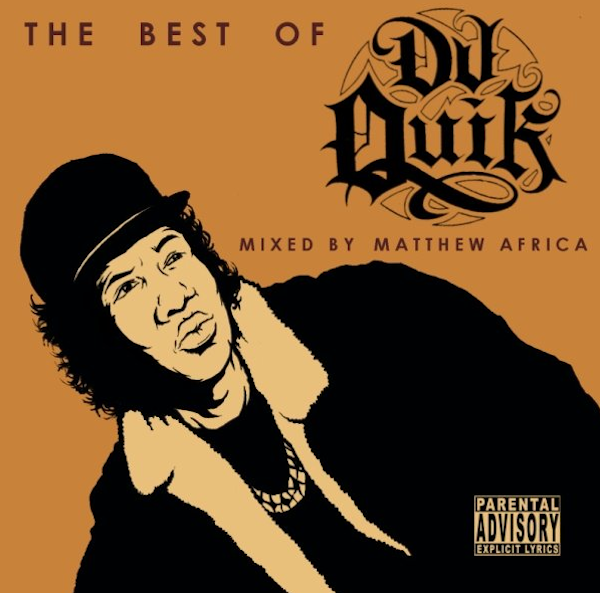
Within the ten years of local work I made hundreds of black and white fliers. My very first poster for for the band Karp. They came through six or seven times and became great friends, I made a poster for them everytime. Those shows and that time of my life hold a lot of nostolgia for me. Lots of great bands came through and I got to see some pretty amazing people play in very small venues. From Elliot Smith playing «House of the rising sun» to twenty people to breakfast with Neutral Milk Hotel. Those crazy nineties!
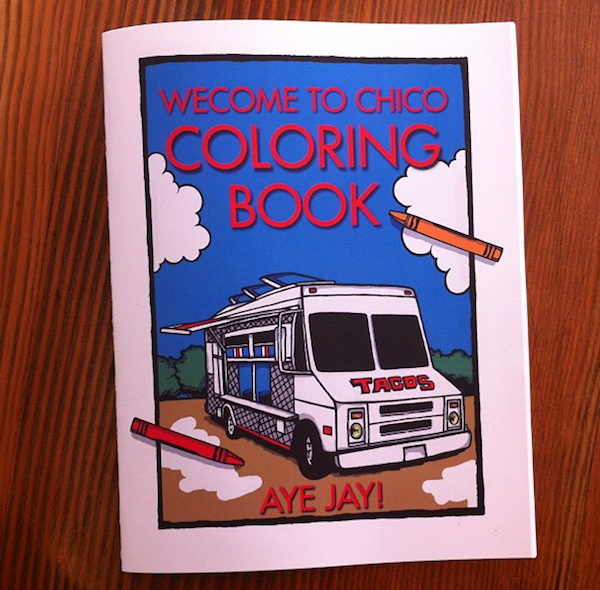
Tell us about your place of residence, Chico, California, you dedicated a colouring book to that town, it must be special, why?
It really is. I was born and raised here, it has the second largest urban park in America that runs through the middle of town, it’s known as the City of Trees because it was founded by an arborist. It’s a liberal college town, great food, lots of amazing memories. It’s home, and I feel very lucky to get to raise my kids here.
Have you ever work or think about working as a cartoonist for an editorial or independent project?
I’ve been approached to do comic type of stuff but its not really my strong suit. I’m always open to anything but most things like that I’ve done have been of my creation so it may be hard to give up the control when working with an author or editor. I’m lucky enough to be busy doing the stuff I want to do too.
Through which brands or media are wegonna see new works from Aye Jay?
More of the same it seems, but I’d love to do some art for shoes and a couple kids books I have ideas for. It’s not lost on me that I’ve done most of what I set out to do, and that’s pretty great. To have people ask me for advice is weird, but really cool. The answer is always the same: hone your skills and hustle super hard. I still track down 80% of the work I do. Just find people doing cool stuff and try to work with them.
– What famous/popular mascot or character you wish have created?
The Whammy cartoon from the 80s game show Press Your Luck!
Words: John López
Deja una respuesta